Friday, 28 June 2019

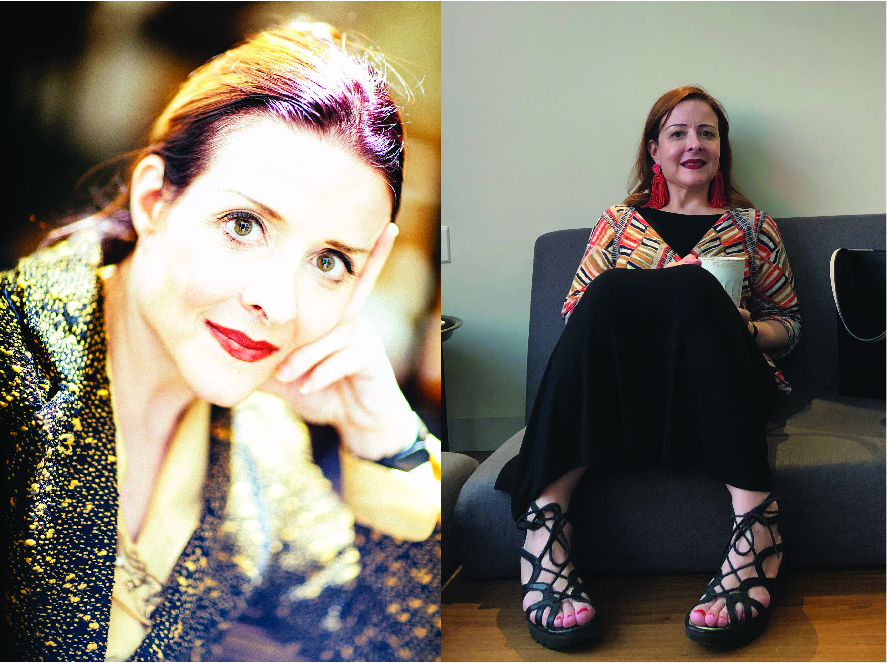
Grace Morales, IXO Advisor and Newly Elected Member of ISEP Council of Advisors


Grace Morales

Our staff here at IXO are constantly looking for ways to promote study abroad and make it more accessible for both incoming and outgoing students at AUS. Grace Morales is one such staff member. She is our Advisor of International Exchange Programs, and in this capacity, she manages all of the incoming and outgoing study abroad programs at AUS. This year, Morales was elected to serve on the ISEP Council of Advisors for a three-year term. This position will give her the chance to contribute her ideas to improve aspects of ISEP, break down barriers to study abroad, represent AUS students and their challenges at ISEP, and more.

First of all, ISEP stands for International Student Exchange Program, and according to their website, they are "a non-profit educational community dedicated to helping students overcome the financial and academic barriers to study abroad." AUS has been an ISEP Member Institution since 2010. The ISEP Council of Advisors is the elected voice of the ISEP member community, where Morales will be representing ideas from regional and AUS perspectives. So what does she hope to bring to the Council? "I would love to serve the Council to contribute to ISEP’s continuous improvement efforts, including easing the application process," she said. "I often encounter concerns regarding the application from AUS applicants and have workable ideas for improving the system even more."

Morales also wants to focus on breaking down academic and other barriers to study abroad, because as she said, "[A]n important goal for AUS is to facilitate increased numbers of outbound students." Morales also wants to use her position at ISEP to encourage more students to come to the UAE and study at AUS: "I am very keen on meeting and working with ISEP and its constituents around the world. I will be able to convince ISEP members to send more students to AUS. Their students would not only learn academically here but rather they would also see how the UAE is a melting pot of different cultures and beliefs."

In this way, Morales said, her presence on the Council will benefit IXO and AUS. "I will also be able to represent AUS students well when it comes to the challenges they are facing when they apply to ISEP," she said. "I will ensure that they are brought to the attention of the Council so we could come up with feasible ideas to overcome them."

Why does Morales, and IXO at large, work with ISEP in particular? "By collaborating through the ISEP Exchange Program, studying abroad has become so ‘accessible’ and affordable – it opens the world up to our students," she said. "Our students pay the same tuition fee [that they pay] at AUS and get the benefit of studying abroad. We believe that ISEP is dedicated to helping students overcome financial and academic barriers to study abroad and will continue working hand-in-hand with them to achieve that goal."

Ultimately, Morales' work as an Advisor here at IXO and her upcoming term on the ISEP Council of Advisors come from a passion for giving students the experience of studying abroad. "I am interested in facilitating study abroad for students since I would like to let them know that there is a good return on investment when you study abroad. You broaden your professional network, learn a new language, become more independent and resilient, and a lot more. It also opens opportunities for graduate/master/doctorate studies. When students study abroad, they become a magnet to employers," she said.

"In addition, what could be more rewarding than when they come back elated and fulfilled, and partly because my team and I had made this happen for them?"


Suzana Saoud
IXO Publicity Specialist

Saturday, 15 June 2019

Why I Went for an Exchange Semester and You Should, Too!


By Zaid Nasir Khan, AUS student

At the University of Vermont campus

Roll back the years to 2014 and I am in my senior year of high school wondering what the next chapter in my life holds for me. As a typical student about to graduate from high school in a few months’ time, I started shortlisting universities across the United States and England. I always wanted to study abroad, not because I did not like Sharjah which has been my home for almost 20 years, but because I always wanted to experience living independently and exploring new places. 

However, like most parents in this part of the world, my parents were just not ready yet to send me thousands of miles away. They wanted me to pursue my higher education in the UAE itself and so I enrolled in the American University of Sharjah, which has been nothing short of an incredible journey that allowed me to meet life-long friends, learn from esteemed professors, develop professionally and personally, and oh, go for an exchange semester too! 

I still remember how the prospect of going for an exchange semester excited me during my orientation week. Fast-forward to my sophomore year and I had formally started the process of applying for my exchange semester. Before we move further, I would like to bust a myth first: the myth that applying for an exchange semester is tedious, time-consuming, complex, and simply too difficult. That is simply not true. In fact, it is as easy as filling a few forms and with the help of the IXO team you will have absolutely no problems at all. Yes, there are some aspects that are more time-consuming and exhausting too, but has there ever been a worthy reward for easy work? 

I identified universities in the United States that interested me and applied to them. I wanted to take a break from the urban lifestyle of Dubai and go to somewhere calm, embedded in nature, and surrounded by mountains. Vermont fit these criteria perfectly. I was going to study in the 'Green Mountain State,' and more specifically, at the University of Vermont.

So why did I go for an exchange and you should too? I have a few reasons listed below: 

1. Explore

It was January 1, 2018 when I reached Boston. It was the perfect way to start a new year, diving into a new challenge. I spent a few days in Boston first, living with my cousin and exploring the beautiful city which is also home to the most prestigious academic hub in the world, hosting universities like Harvard and MIT. When going to Cambridge, you cannot ignore the Harvard Bridge, an iconic landmark that has appeared in countless movies. I could not help but picture those scenes around the location. Boston’s true beauty, though, lies within its people, who are so diverse, coming from every corner of the world and bringing their traditional food. You will find everything from Japanese sushi to sub-continental desi food to an English breakfast to some steak and fries, and if you are a bit homesick there is plenty of shawarma as well. Of course, the Boston Harbor and Quincy Market are just two of the many incredible places to visit in Boston as well. Full of character and flowing with history, the two places were unmatched as they hosted the best lobsters in New England and street performers like nowhere else.


With Boston checked off my bucket list, we headed to the Big Apple, New York! Buzzing with excitement, we reached ever-busy Manhattan at midday and I was shocked to see the pace of the city. It was lightning, faces from every corner of the world, languages I had never heard before, all in one place: Manhattan. As a marketing major, I was also really excited to see Wall Street, a financial district with such great influence over the financial markets of the world. The entire city of New York was simply breathtaking. 


With few days left, I had to head up north towards Vermont. My orientation week was soon to begin so my cousin and I drove up in a Nissan Sentra 1999. Although it was snowing, we did not expect to encounter a snowstorm on the way. For 5 long hours, we drove north, stopping every few miles so that I could wipe the snow off the windscreen since the veteran car’s wipers had frozen. Eventually, just before midnight, we reached Vermont and I got to witness its beauty for the first time the next morning. A breathtaking view of mountains stretched across the skyline, covered with snow with the sun shining bright onto the frozen Lake Champlain. The Church Street in Burlington was still decorated from Christmas which added a festive touch to the city.


My university looked like something out of a Harry Potter movie as it was more than 200 years old! Some buildings looked like historical museums given their architecture and how the interiors were still preserved and protected from modern design. That being said, it was still contemporary in the manner in which it addressed the needs and wants of its students. I thoroughly enjoyed my time exploring Vermont and on long weekends I would explore others states around New England, too. Only an exchange semester could make this possible. 


2. Get out of your comfort zone

I was way too comfortable living in Sharjah. I had been here for almost 20 years and life basically had an ordinary static routine, nothing dynamic. I wanted to change that and get uncomfortable. What happened next was way beyond what I expected. I was blown away by the cultural shock; even though I had heard from many that it will take time to adapt, I had always underestimated it. The food, for instance, was not halal in the university’s dining halls and the closest halal restaurant would charge me $25 for a single piece of kebab that would be far from enough, not ideal for a student’s budget! This, however, gave me an opportunity to go vegetarian. I wanted to experience a different sort of diet but I never had the discipline to pursue one properly. So for four months I was on a vegetarian diet. Though it was extremely difficult for the entire four months, I am immensely proud of myself for successfully doing it. 

Next is the weather. Snow looks great in pictures and is also very enjoyable for a week. But if you have to live in the freezing temperatures of Vermont for months, you better get some vitamin D tablets along with you because there will not be any sun for days or sometimes even weeks. Having to wear 3 layers of clothing and walking to class in immense snow is incredibly challenging. You feel like you are doing a documentary on National Geographic somewhere in the Arctic. Temperatures went as low as minus 30 degrees Celsius! So that is another challenge you need to face but it does get fun with the snowball fights and watching people slip on slippery paths of the campus. On the bright side, I can now also say that I have experienced everything from the scorching heat of Dubai to the brutal cold of Vermont! 


I did eventually adapt to the food and weather but something that really shocked me was how small the population was in the city, particularly when I first arrived. Burlington (the city I was in) only has a population of just over 42,000 people, and out of those, around 20,000 were university students. Exchange students were asked to check-in almost a week earlier than the rest of the university so I was virtually in an empty ghost town. Thankfully though, two of my friends from AUS, Saif and Sid, were also accepted into the University of Vermont and so we had each other’s company. Despite that, suddenly moving from such a densely populated city like Dubai to Burlington in Vermont was mentally challenging. But that was the reason I wanted to study there, to be somewhere calm and peaceful surrounded by nature. So eventually, I did adapt and enjoyed exploring the city. 


3. Make friends from around the world

Vermont is also one of the most liberal states in the USA, if not the most liberal, and having grown up in a conservative society in Sharjah, the contrast was eye-opening and exposed me to people that I would have never met otherwise. I met people with incredible stories about their lives that I will never forget. This experience allowed me to meet friends from Australia, South Korea, Germany, France, Spain, the Netherlands, Switzerland, Guyana, Vietnam, and beyond. And of course, my American friends introduced me to American football and baseball. Along the way, I made some incredible friends that I am still in touch with and hopefully will be in the future, too. 

These are just three reasons to go for an exchange semester but there are infinite others too and you can only discover them by your own experience. Our exchange program allows us to go to universities around the world for at least a semester, so why not take advantage of it? If I have one regret, it would be that I only went for one semester instead of going for a second one in Europe as well. I remember walking into the exchange office in my sophomore year and a brochure on the table said, “Exchange is not a year in your life, it is life in a year,” and I can assure you that is absolutely true. 


Friday, 31 May 2019

Iftar with an Emirati Family


Catherine and Zsofia show off their henna painting from the iftar

Iftar is one of the most important gatherings for Emiratis and for Muslims in general. Every evening of Ramadan, at the sound of the sunset call to prayer, the family sits down together to break their fast. To be welcomed into a family's house for iftar shows trust and generosity. Two of our incoming Spring 2019 students got to have this precious experience when they were invited to an iftar dinner at the house of Maha Al Shehhi, a local Emirati woman. Zsofia Slamani from Simon Fraser University, Canada, and Catherine Kachman from the University of Alabama, USA, enjoyed an authentic Emirati iftar with Maha and her family complete with mouth-watering food, henna painting, and most importantly, traditional Emirati hospitality and generosity.

Dr. Linda Angell, the Director of IXO, fixed Zsofia and Catherine up with Maha, who is a friend of IXO and an AUS College of Engineering alumna. Maha often hosts expats like IXO students in her Ajman home, and Zsofia and Catherine got in touch with her to coordinate to attend her family's iftar on Tuesday, May 21.

Zsofia and Catherine were nervous about going to the iftar at first. "We went to Spinneys and got flowers and a fruit plate as gifts," Catherine said. "We then took our taxi there, and we were very nervous. When we walked in, we were blown away by how nice their house was and how welcoming they were. From the moment we arrived, they were so sweet and nice; they made us comfortable. And then, more of [Maha's] family started arriving, and it felt like we were at a genuine family gathering, like it was any normal iftar with their whole family."

Catherine noted how this family gathering differed from her family gatherings back home in the USA. "We live so far away from each other in the USA; my nuclear family is in Maryland, but my aunts and uncles are in Florida, Michigan, Nebraska - all over the USA. So we never had the more ‘casual’ iftars together because everyone’s so far away. In contrast, when we went to the iftar at Maha's house, everyone knew what was going on in each other’s lives and they were much closer with their cousins and aunts. I also think they were much more comfortable and very honest with each other because they see each other so often. It was nice just to see their family and how open they were. Aside from the two of us, there were also journalists there who had no real relation with the family, and the family were just as nice and generous with us as they were with them. They made everyone feel very part of the family."

"For people they've never met before, they treated us exceptionally amazing," Zsofia agreed. "For me, the best part of the iftar was the overall atmosphere, being so welcomed, being taken in like it’s nobody’s business." Catherine added that she enjoyed just being around the family even after the dinner was over: "I really enjoyed afterwards, when we were all sitting on the couch, drinking chai, tea, or coffee, and just hanging out," she said. "They did our henna, and we just talked about the strangest things. Maha's mother put on an Emirati TV show that only comes on during Ramadan, and we talked about different cultures and how it is in the USA and Canada. I really enjoyed doing that because it felt like a nice hangout session."


So how was the dinner itself? "The food was amazing," Catherine said. "They had so much food, these big bowls just stuffed with chicken and rice, and it was so, so good." The girls described the delicious harees they had, which is a traditional Emirati food made of wheat and lamb. "They also gave us freshly-squeezed kiwi juice, which was amazing!" Zsofia said. Catherine enthusiastically agreed, saying, "I know, I know, it was so good!" They also recounted eating little samosas, salads, mandi-style chicken with rice, and a stew with lamb, carrots, onions, and eggplant. "I had the best dates I've ever had in my life," Catherine said. "I put this date in my mouth and it tasted like silk!" she laughed. "I was like, is this actually a date right now?"

The iftar spread

I asked the girls if they felt like they became friends with the family, and they passionately spoke over each other to agree. "Oh yeah," Catherine said. "Not just friends. We cried when we left!" Zsofia agreed, saying, "They told us, 'You don’t just have friends in the UAE, you have a family, you have a home for when you want to come back,' and you could tell they were 100% genuine about it." Catherine piped up: "[Maha's] mother was the world's sweetest person. Both Maha and her mother were so kind and opened up their home and held nothing back. During the taxi ride back, we were so emotional. I couldn't believe we were just now meeting these people," she said. Zsofia agreed, exclaiming, "We've been in the country for four months!" Catherine continued, "Exactly! Imagine if we had met them our first week. I feel like we would've been hanging out with them every week. And then, just considering that we had just met them, how kind they were was just shocking."

Maha and her family made sure to give the girls a good view of genuine Emirati culture throughout their visit. "[Maha's mother] said something along the lines of how as Emiratis, their duty is to introduce people to their culture and way of life," Zsofia said. "She heard that some people had been in the UAE for lots of years and they've never even met an Emirati family. She said, 'As Emiratis, we're the minority, and people are coming to our country, so it's our job to teach them about our way of living.' So they see it as a responsibility, and they were more than willing and happy to do everything they did for us."

For more about Catherine and Zsofia's iftar at Maha Al Shehhi's house, check out this (Arabic) news article by 24Media.


Suzana Saoud
IXO Publicity Specialist


Friday, 24 May 2019

From New York to Dubai: Suzy Sikorski's Journey

Suzy during our interview with her

'Studying abroad changes your life' may sound like an empty platitude, but in Suzy Sikorski's case, it's genuinely true. Suzy came to AUS in Fall 2014 as a junior international politics student from Fordham University, New York. However, she soon found out that her passion lay not in politics but in the arts - particularly Middle Eastern art. During her time in the UAE, Suzy immersed herself in the local art scene, interviewing local artists, studying Emirati art history, and working at art fairs and galleries. Suzy moved to the UAE to do more research after obtaining her Fulbright Scholarship and now works at Christie's Auctions in Dubai. She has found fulfillment and success through her extensive research on Gulf and Emirati art and artists, as well as a place where she feels inspired and at home: the UAE.

Early Beginnings

Suzy comes from a Polish-Italian family in Long Island, New York. "I grew up living a very American lifestyle," she said. "I was always interested in history and culture from a very young age. Even when I was just watching Aladdin or other cartoon movies about the East, I was so interested. I wanted to go there and experience different people, because I came from a very boxed-in community."

Coming from a small family, Suzy had big dreams. "I went to school and I studied international politics with the hope of potentially working for a foreign service," she said. "But I realized early on in my sophomore year what my skillsets were and I learned that I wasn't going to be ruling the world or President of the United States. That's just not where I'm excelling. Where I'm excelling is the arts, explaining an artwork to someone, feeling and empathizing with an artist, and interviewing the artists."

"Pulled in Both Directions"

Suzy ended up having a year planned in Morocco during her junior year. She planned everything from start to finish, and she was looking forward to perfecting her French and learning about Moroccan culture. Suzy remembers that her father once mentioned Dubai, saying, "Did you check out Dubai? It's big in documentaries, it's this cool place," but she didn't think much of it back then. "At the time, I was very much pulled in both directions; I was just coming of age in my sophomore year and I wanted to assert myself, I wanted to be financially independent," she said. One day she met a Jordanian professor of sociology who asked her, "Where can you see yourself in five years?" This was five years ago. Suzy replied that she saw herself as a specialist in Middle Eastern Arts at Christie's. "It gives me chills to think about it now," Suzy said.

The professor told her to cancel her entire trip to Morocco and head to Dubai. "I called my father, and he was like, 'I told you so!'" Suzy said. "The international exchange office at my school thought I was insane because I kept on switching. I applied last minute to the only school that my university was connected to, which was AUS. I had no idea about Sharjah; I came here not knowing anyone and was very open about it. It was always with the intention of working in Middle Eastern art," she said.

Time at AUS

"People just kind of knew me as the arts girl," she said. "People here helped me out a lot and I ended up interning at Ayyam Gallery in Alserkal Avenue. I also ended up helping out at galleries and art fairs. I did everything that I could to meet more friends that were not from IXO but were instead from the local population, so I just felt so at home here. It seemed like so many aspects of my life were being fulfilled; I was coming of age and growing up, and at that point, I wasn't talking to my parents as much. But you need that sometimes, to feel removed, to learn who you are, and that's exactly what happened."

Suzy says IXO was very helpful to her during her semester at AUS. "I’m so thankful to being with IXO; I'm a very independent person, but without them, and without that community and support, I would’ve felt very out of place. I made so many close friends here," she said.

In fact, through an IXO friend, Suzy was able to tap into the local Emirati art scene. Without even knowing in advance, Suzy met up with Abdulnasser Gharem, one of the most famous artists in Saudi Arabia, via her friend. In turn, Abdulnasser introduced her to the community of older Emirati artists. "At the time, I had no idea about the art communities within the Gulf, within Saudi Arabia, within the UAE. They're very close, and this topic turned into my thesis and my Fulbright Scholarship. So I spent over two years interviewing local Emirati artists and I fell in love with it. It fulfilled a need because there's not a lot of people documenting local art history here," she said.

Suzy stayed at AUS only for one semester, but she ended up coming back to the UAE two or three times afterwards before she even graduated. "I came back to always be here, to work at art fairs and galleries," she said. "Somehow I always found myself here."

Fulbright Scholarship and Research

For her Fulbright Scholarship, Suzy spent ten months right after graduation researching local Emirati artists. "It was so amazing," she said. "I met them, filmed them, interviewed them, recorded them - I have a website where I feature all these interviews, and it turned into a recording of my time here. It was really powerful, and so I'm very happy that I established myself before joining Christie's."

Suzy formed close bonds with the local artists she interviewed. "I became especially friendly with the older generation because they're so down-to-earth and welcoming. So it turned into me interviewing these artists, and I still do it, but it's been hard to balance with work. At the same time, it reinforces my role as a specialist in this category [of Gulf art], which not a lot of people are, and I think what allowed me this specialization is the access I had to these artists. It's not easy; you have to meet someone who will trust you to go to their private home. It's a very intimate setting that I would be in. It transcended research boundaries, and now I feel like they're part of my family. I've learned so much from different people, and that's the beauty of my job," she said.

Move to the UAE

When Suzy went to the UAE for her Fulbright Scholarship, everyone assumed it would be a temporary move and that she would return to the States - but she didn't. "I wanted to grow, I wanted to experience, and I knew where I was living then was not going to foster this productivity in my mind," she said. The decision to move came around June/July 2017 when she was finishing with her scholarship, and her job at Christie's came at the right time.

As she is an only child, Suzy's parents had some difficulty accepting her move, but they were eventually supportive. "Over time, you learn that your parents will always be supportive in the end. It’s your personal choice and it’s what you want, so you have to chase your dream," she said.

Christie's and Beyond

Suzy currently works at Christie's Auctions as a junior specialist. She is in charge of writing the entire catalog, which focuses on modern contemporary Middle Eastern artists, including from the Arab world and Iran, ranging from the early 1900s to today. So how has this job been for Suzy? "I’m living my life, I’m maturing, I’m growing up here," she said. "Especially working in Dubai, you grow up very quickly; it’s such a small group of people working within my team that you are exposed right away. I’m always meeting with collectors and learning about the market. It’s all part of the experience."

To bring things full circle, we asked Suzy where she sees herself five years from now. "I think I’ll still be here," she said. "There’s so much work to be done here, and I’m in a perfect position to grow and connect. I’m growing with the artists I’m meeting." Suzy also plans on staying here because of the deep connection she has developed with the UAE. "I genuinely found my soul here. I had many dinners with these local families who were so, so entirely different from my family back home, and I would just look up at the sky, in the beautiful majlis in the courtyard, and think, I feel so at home. I was surrounded by a very traditional Muslim family, and I just felt my soul was present; I felt like there was something larger that was bringing me here and I felt so connected. It was a very powerful feeling and that’s what makes me stay."


Suzana Saoud
IXO Publicity Specialist

Saturday, 11 May 2019

Ara Azizbekyan, AUS Alum


Ara during his visit to our office

The positive impact of studying abroad lasts long after you return home, and it can translate into tangible benefits later on in life. We recently had a visit from Ara Azizbekyan, an Armenian AUS graduate who majored in management at the School of Business Administration. He studied abroad at George Washington University in Washington, DC, USA, in the Fall 2016 semester. After his graduation in May 2017, Ara landed a job as a consultant for Knowledge Workx. He says he wouldn't have gotten his current job without his study abroad experience, as Knowledge Workx were looking to hire people who had international experience and demonstrated intercultural intelligence and interest.

Ara was the only representative from the Middle East during his study abroad at GWU. During his time abroad, he was surprised to observe that the various friendship groups that formed at the university had nothing to do with nationality, but were instead founded on the basis of common interests and shared experiences. The cohort he belonged to ended up being super international and cross-cultural. Another difference Ara observed between the USA and the UAE was between their respective 'world views' - the USA world view focusing on a rule-based approach to determine 'right' or 'wrong,' versus the more relational and honor-based focus for determining 'right' or 'wrong' in the UAE. 

Ara's study abroad was also a gateway to his personal development; it was the first time he'd ever had to live by himself. He learned how to cook, do grocery shopping, do laundry, and just take care of himself (i.e. not just eating junk food). He lived with three 'strangers' in a two-bedroom apartment and had to learn how to set boundaries and respect his own and his roommates' personal space. And finally, he had to learn how to properly balance study, work, and play. 

Studying abroad gave Ara the desire to travel and explore more. He didn't really go through any kind of slump when he was abroad at all, but he found that he experienced severe reverse culture shock when he returned back to the UAE. He wishes that he'd been able to extend his study abroad to stay longer - unfortunately, he wasn't able to due to his graduation, and he wasn't able to go any earlier due to passport issues. Regardless, the experience had a very significant impact on his life, both personally and professionally.

Spending a semester in GWU isn't the only international study experience Ara has had. He has also completed an internship in Armenia as well as his undergraduate studies as an international student at AUS in the UAE (when his home country is Armenia). These experiences were a huge part of why Ara gained employment at Knowledge Workx, whose mission is "to be the globally preferred choice for interculturally intelligent consulting, coaching and learning." He joined the organization about a year and a half ago and has completed their ICI and DISC Certifications. While undertaking these certifications, he found that all of his own personal stories (shared with other class members) came from his study abroad experience at GWU. Ara currently designs training programs and develops them virtually for global participation. He finds that the Knowledge Workx tools and frameworks resonate with his experience.

Ara also remembered Osama Mafraji, who was his International Exchange Advisor and the predecessor of Grace Morales, who now occupies the same position. Before Ara left for GWU, Osama told him to call him anytime, day or night, if he experienced any issues while abroad. Osama had studied abroad through our program himself prior to his graduation and knew first-hand about the sort of personal journey that a study abroad experience can take a person on.  


Suzana Saoud
IXO Publicity Specialist


Friday, 26 April 2019

Summer in Istanbul


We have a somewhat more unconventional study abroad story to share with you this time around. Noureldeen Tamimi is a Jordanian junior mechanical engineering student at AUS who spent Summer 2018 in Boğaziçi University (Bosphorus University) in Istanbul, Turkey. However, he did not arrange his study abroad through our office but rather opted to arrange it on his own. He specifically wanted to visit Turkey because a friend had advised him to: "A friend of mine went to Turkey a year before, and they told me about the experience and I said, 'why not?' I was looking for a new adventure and something different to do. I saw Turkey as an opportunity to discover my personality and do something fun and crazy!" he said.

Noureldeen stayed in Boğaziçi University's dorms during his 7 weeks in Turkey. According to him, the dorms were the best part of his time at the university: "It was very chill," he said. "They weren’t strict, there was no curfew, and they provided good facilities. And of course [the dorms are] the main place to meet people, so that was the best part." I asked Noureldeen how else Boğaziçi University is different from AUS, and he smiled. "It’s different from AUS in every aspect," he said. "First of all, there's the fact that it’s in Turkey, so you’re living in a different community, a different society, a different culture, and that itself makes it an experience. But also, this campus had a private beach, an outdoor pool, and they gave us free tango lessons! And also, the nature of the people there was different, so that also creates the experience."


But some things were relatively similar between the two universities - Noureldeen said the academic system in Boğaziçi University was not drastically different than in AUS and did not require much adjustment. "Basically, you just need to follow the syllabus of whatever you’re taking there. If you just follow the instructions of the professor, you'll be fine," he said.

Although Noureldeen first said the dorms were the best part of Boğaziçi University, he changed his mind when the topic came up again: "I know I said the housing was the best part, but actually, it was the campus. The campus was huge, it had a view of the Bosphorus, it was green, it was beautiful. So yes, the best part was the campus for sure."

Noureldeen made the most of his time in Istanbul. "I went to Bebek Village along the Bosphorus, to Çamlıca Hill, which is the biggest hill in Istanbul, to Galata Tower... Turkey is full of these sights," he said. Given the sheer size of Istanbul, Noureldeen could satisfy his desire for adventure without leaving the city. "Because Istanbul is huge, I went all around [the city]. I had the opportunity to go to Cappadocia, a different city, and I regret not taking that opportunity. I plan on going to Turkey again next summer to visit Cappadocia specifically," he said.


So how is Turkey different from the UAE? "First of all, the weather!" Noureldeen laughed. "And the nature - they have four seas in Turkey. The vibe itself is different; it’s very festive there." He said that there is a stereotype that Turkish people are difficult to approach, but he found the opposite to be true: "They were actually very friendly and welcoming."

Noureldeen reflected on what he gained from his study abroad. "As a person, when you meet people from different cultural backgrounds, it changes the way you look at people. You need to take into consideration that each individual has a different cultural background and therefore a different way of thinking. [My study abroad] also taught me how to be self-dependent, how to never say no to an opportunity, how to have fun, and how to speak Turkish! Well, not that much, but just the basic survival language," he said.

Another consequence of Noureldeen's study abroad is that it inspired him to want to work here at IXO. "If you tell someone you're going to study abroad, they'll think it's all about going to a different place, a different country," he said. "For me personally, after my experience, I've found that the 'study abroad' is in meeting these people that you meet while you're in a different country. So through communicating with people you gain such a magnificent experience, and that's why I want to work at IXO: to meet new people and seek new adventures."


Suzana Saoud
IXO Publicity Specialist

Tuesday, 19 March 2019

Christa Salamandra


Christa Salamandra is a FullBright researcher hosted by the College of Arts and Sciences here at AUS. Although she's originally from New York, Salamandra's been visiting the Middle East since the mid 80's, and returning again and again since.

"Why Syria? Because why not Syria?"

Salamandra is a specialist on the Arab world in anthropology and visual culture. As a result, her work and research are driving forces for travel. She visited Syria for the first time in 1985 and even spent a year there as a student.

Her work began to reflect and center intensively on the old and culture-rich city of Damascus. When asked why Syria, she had responded, "Because why not Syria?". Salamandra's curiosity and dedication to learning, analyzing and understanding the country's complex societal nature is evident through her work. She chose Syria to do field work on as she believed not enough work was being done on it. She commented on how Syria would change every time she'd visit it, an observation of  a growing culture of consumption and leisure was apparent. Salamandra elaborated on how Damascus has "competing impulses" when it comes to spending time in the city now versus in the 90's.

Arab TV Drama Industry 

Syrian television dramas were a key factor in turning Salamandra onto the field of Arab TV, which has brought her here to the United Arab Emirates. She states that the UAE, and the Gulf, are so essential to that industry that they became part of the structural foundation. Hence, she began writing on how the Syrian drama industry took off in the Gulf region with the enormity that it did.

However, when she first began writing this narrative, the narrative kept changing. A challenging part has been the need to constantly update the material she's already written. Her first time in the UAE (in 2008) was in fact for the sole reason of updating some of the research she found outdated.

Her passion lies in the industry because of the interesting narrative it follows (and in some cases, un-follows), and lies in the Arab world because of fascination coupled with intellectual understanding. This is why Salamandra has been to Lebanon, Jordan, Egypt, Syria, Turkey and two GCC countries in her lifetime. Consequently, she made connections with writers, actors, producers and creatives of the industry.

Her Time at AUS

Salamandra told us her favorite part about the UAE has been living on our beautiful campus. She was taken aback by the grand architecture, the serene greenery and the welcoming environment she was constantly reveling in. She commented on how wonderful her colleagues have been, and how enjoyable her interactions with students were when they happened. Although she was not teaching during her time here, she was asked to talk to an English class whose students were analyzing one of her papers, and was delighted in the constructive conversation it bred. Salamandra was impressed by the fluid and quick transition she had when coming to AUS and the meticulous university organization of the process. When asked if she experienced a cultural shock, she responded with her amazement at how diverse the combination of languages present in the country were. She thanked the hospitality of her department and stated her deep gratitude for all those who allowed her stay here to be immeasurably memorable.  

What's Next?

Salamandra is heading back to New York after she spends a few weeks exploring and traveling around the UAE once her research time elapses. She hopes to have a draft of her book by September. We wish her all the best in her important research and the exciting book she's working on. We sure hope she visits again!


Bayan Almasri 
IXO Publicity Specialist